When starting a project I typically spend quite a long term researching. Photography encouraged a different way of working, The day after been given the brief, I went out to to take some photos. I used this trip to get used to digital camera, a Nikon 5600, given to me by Paul. I’ve experimented with film photography in the past, using my mums old camera. So it was a bit different switching from that. I did some research and thought about interesting, different people. I found out there was a commune in Kingston. https://www.surreycomet.co.uk/news/14274085.in-pictures-londons-last-commune-being-broken-up-by-social-housing-landlord-after-40-years/
They have since been evicted but I thought I’d go to this house which was about 40 minutes away from me by foot. This was mainly an excuse to go for a walk and take photos on my journey, but after doing this research my personal curiosity grew – I wanted to see if the commune had any legacy and impact on the environment.
I have a visual interest in architecture, light, negative space but have always had a great admiration of “street photography” and how people within the urban environment are captured on camera. There’s so much within this genre. It can be really hectic and invasive with photographers such as Bruce Gilden or Dougie Wallace who create frantic aggressive depictions of humanity. However, contrasting this there are street photographers such as Vivian Mier and Fan ho who have a much more gentle, sensitive approach. In Ho’s work people become part of compositions and are sometimes dwarfed by their urban environments. These photographers (apart from Dougie Wallace) work in black and white. To me when colour is used, a part of the photo inherently becomes about colour and whilst the same could be said about black and white, there are less variables at play. Perhaps it also gives the images a sense of legacy. People often take of lots of photos around the city on their phones, maybe it detaches a bit from this.
When taking photos on my walk, I kept my camera at my belly and pointed slightly up. After experimenting with film photography, I’ve learnt how to work to lighting conditions with shutter speeds and apertures and occasionally took test shots to see what my image quality was and what was in focus. I would then focus on people and take photos and moments without having to look through my lens. I’ve decided to capture moments of human interaction and am exploring the idea of the “unseen photographer”.
Some other bits of research:
https://www.tate.org.uk/art/artists/nan-goldin-2649
https://erickimphotography.com/blog/fan-ho/
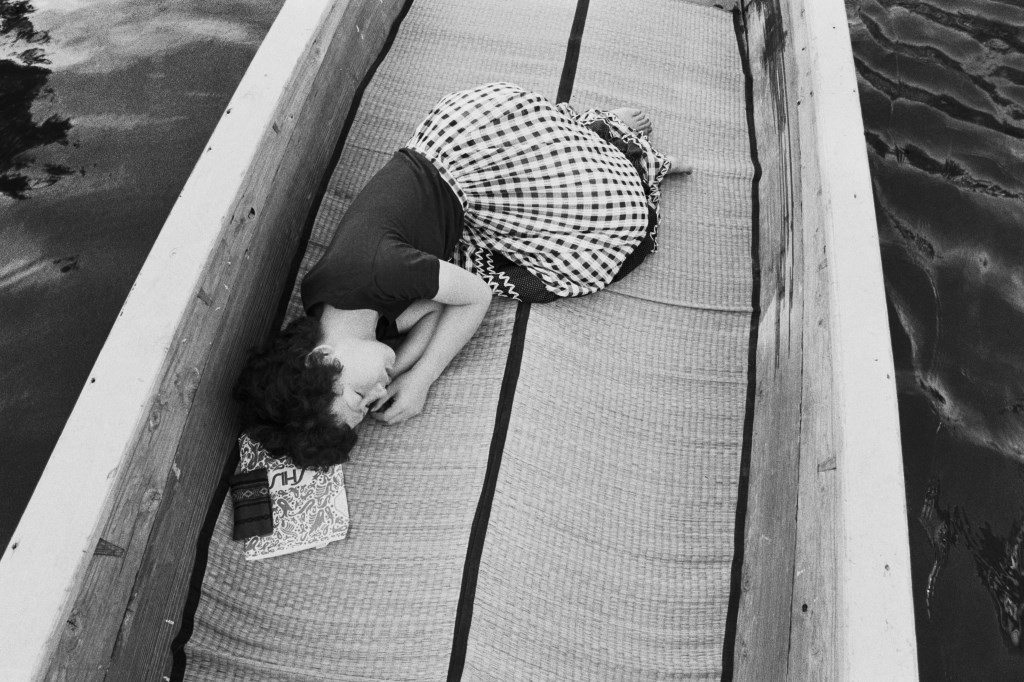
I also thought about a photographer who challenges me and puts me outside of my comfort zone. I’ve always been quite conflicted about the Japanese photographer Nobuyoshi Araki who in his photography books portrays really tender pictures of his wife and Japanese street scenes juxtaposed alongside visceral pornographic staged photos.

I had an Encouraging early crit with Andrew with the main advice being – keep going. I explained how I don’t look through my view finder my photos, keeping the camera at belly level makes it so you look up to the people in the pictures. I was told to look at Robert Kapa who took photos of people’s faces in war zones, as they were running away from bombs, he would run towards them. I then got out the book at the library “The photograph as contemporary Art” as recommended by the brief.

Andrew said it was particularly relevant to my project. I’m somewhat neglecting the in depth technicality of film to capture “moments” as I’ve found out they are called in street photography.
vivian maier
Robert Kapa

 Cameron Aitken Graphic Design