

Having been given the brief, I was excited to spend some time in an area of London I’d visited in the past but am not very familiar with. Brixton is famous for its diversity and cultural richness and I wanted to witness this firsthand and relate it back through design. I linked the project back to one of my previous interests. I have a great respect for the Danish architect and urban designer Jan Gehl having seen how his socially driven design philosophies have improved “liveability” in Hackney. It has made me think differently about how people interact with the urban environment and has made me question whether urban spaces are really for people as opposed to cars and buildings. His design philosophies were on my mind before starting this project.
https://www.designcouncil.org.uk/news-opinion/how-hackney-became-london-s-most-liveable-borough
The day we received the brief, we went to Brixton. We researched the history of the area a bit beforehand and thought it was important to first see the Morley’s plaques located in the famous shopping centre opposite the station, which are a series of lightboxes, each offering an insight into the history of the store, and of Brixton as a whole. Featured is Electric Avenue, Lambeth Town Hall, Van Gogh, and the first-ever mention of the name ‘Brixton’

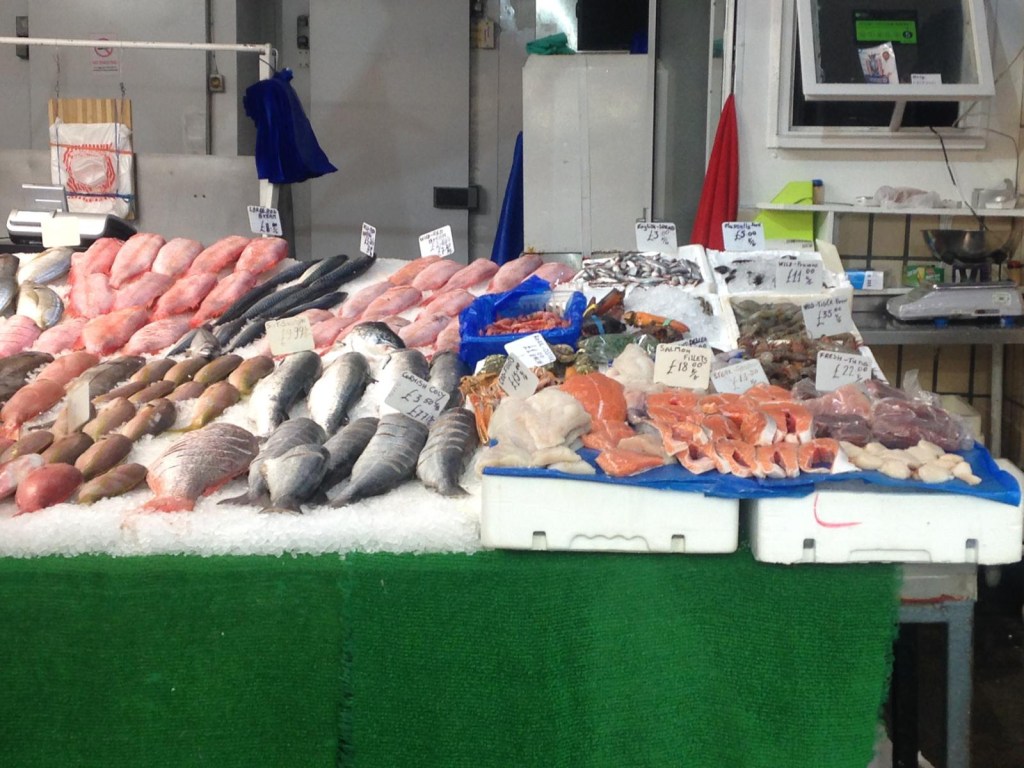
We soon headed to “Brixton village” covered market. Yuna quickly got chatting with some locals at a fishmongers about where we should head next and if there were any spots off the beaten track. A lady mentioned the “Olive Morris House” a site where you can visit where the famous community activist Olive Morris lived. She said how this figure encapsulated the atmosphere of Brixton and it was really inspiring to see her passion for Morris and her message. I think it is inevitable that our project would feature some sociopolitical aspect, even if it was in a subtle, more passive way, it just seemed too important to the identity of Brixton not to include. Obviously as students who are coming to do a project, there is only so much we can say but it was an area that one of the girls in our group Elena had good insight into, having grown up in London and witnessing some of the changes in Brixton from when she was a child. I think an important aspect of group work is to witness other people’s unique perspectives. Elena is also Portuguese and was interested in the strong Portuguese culture which helps make up Brixton’s diversity. We also had a foreign student as well; Yuna. It was interesting to see how she related the area back to her hometown of Brussels.




Working to the brief, alongside a bank of photos, we also took some sound pieces and documented feelings and smells etc. We recorded some sound pieces in Brixton Village, the market, the skate park and walking up and down. It goes without saying even in the early midday, Brixton is bustling and has a lot of kinetic energy and sounds and smells. This research proved this and helped us to understand the importance of the multi-sensory experience. So far we identified some areas that interested us for example, the market, Olive Morris’ house and the Stockwell Skate Park. It was at the end of this first day after lunch in a portuguese cafe, when we came across Pop Brixton.


Initially intrigued by the colourful walls and sustainable shipping container infrastructure it became an important focus of the project. However I found out that the atmosphere Pop Brixton created was somewhat of a facade. I did some research and interestingly there were some recently published articles on it, both exposing Pop Brixton;


https://www.vice.com/en_uk/article/mbmp5v/pop-brixton-market-gentrification-london https://www.vice.com/en_uk/article/zmjwjy/pop-brixton-is-yet-to-make-a-profit
“Sadly for Gilchrist, Sandy and many other Brixton locals, Grow: Brixton would never come to be. Instead the public land that Lambeth Council leased out for free as part of a regeneration project became Pop Brixton, a commercial food market owned by luxury co-living company The Collective.” From these articles it was clear that Pop Brixton was a missed opportunity to do something that whilst appealing to the trendy middle class could of been more supportive to the wider community and locals that feel somewhat alienated from a Brixton they once knew. I presented this back to the group the next day. In the meantime, we did an exercise looking at current art and design installations in Brixton to think about their strengths, weaknesses and who their audience might be. we looked at the “Fox and Cherries” sculpture located in Electric Avenue, which some locals thought was a bit meaningless and childish and needs to represent people more.


Elena mentioned the murals of Brixton which we saw a few of on our first trip. Whilst hand painted and not the most cutting edge in term of their design they are the most approachable to their audience and local community who often have a big part in their creation. These are authentic celebrations of the community which somewhat contrasted with places such as Pop Brixton
ADD MURAL pics


I got excited about the prospect of redesigning Pop Brixton which had a quite naturally mapped out space due to the fact that its made up of standardised containers. I proposed how we could re-utilise the space for different functions for example a community garden, a space that worked more in tandem with the market and local businesses. In my mind we could create some graphics centred around the use of space to map out a new Pop Brixton. I was inspired by the work of the studio Europa and how they utilise graphic design in the built environment such as their work on Station Road, Harrow. They turn a boring part of the pavement into a fun trail for children to cover, utilising the preexisting language of road markings and the double yellow line.

We had a very useful talk with Diego who liked the idea of looking at the flaws of Pop Brixton but thought (and rightly so) that it was heading towards too much of a consultancy project. I think I brought my interests in architecture and urban design too much into the project at this stage. We were advised to think broader at this stage, using the individual design flaws of Pop Brixton as a spring board for more playful ideas. We thought together that the notion of a garden, something that grows, was interesting in this area. At the moment Pop Brixton isn’t likely to grow, it isn’t making much of a profit as outlined in the previously shared article. We brainstormed little ideas such as giving people something, for example a packet of seeds because Pop Brixton doesn’t give back to the community. Pop Brixton, is overpriced, slightly misleading, sometimes emotionally cold and unfriendly and a bit detached from the rest of the area. The main flaw with Pop Brixton is that it doesn’t integrate the community. We gave it a bit of thinking time, it’s hard juggling two bulky projects at once, the style of thinking is different as well, so it sometimes takes a bit of time getting in and out of them.
After we set out to think of ways how to address Pop Brixton’s flaws, Elena came in one morning with the idea of projection mapping. It brought back in this idea of utilising Pop Brixton’s naturally regular shape. I researched into “projection bombing” which is where projection is utilised to protest by projecting often political messages onto significant buildings. Below are a few articles I found particularly useful:
https://www.urbanprojections.com/street-projection
https://www.theguardian.com/world/2018/jan/03/jack-dorsey-projection-bombing-campaign-groups-twitter


We thought how we could utilise the projection to comment on Pop Brixton. I thought that to respond to the lack of community integration we “project” the community back onto Pop Brixton. This addresses the previously identified main design flaw. We could take interviews, videos sound pieces, qoutes etc anything important to Brixton with the canvas being the side of Pop Brixton. Pop Brixton unavoidably becomes a metaphor for gentrification as a whole. However, I think it’s important just to focus on the small case study. In my mind it’s a slightly different narrative, it’s not a housing development etc, it was a chance to create a public space for the community so it’s slightly different. I think it’s worth noting there was some subtle but present “fuck gentrification” graffiti on the side of the building. We thought more about how we should present our method. We had some great feedback from another group and Diego during a review. As opposed to an attack, we should make the piece more thought provoking approach that doesn’t distance people but instead encourages gentler discussion. There was many routes we could take, an attack or peaceful protest but the message more so became an intervention. We didn’t want to distant some locals so we made sure our Pop Brixton installation was more of a canvas to give a more honest message, one which is undirected by us. Diego said it would be exciting to see something actually projected onto Pop Brixton instead of a mock-up. Yuna and I thought about how we could make this work, I went to the loans room and Yuna talked to a friend who knew a bit more about projection installations. Whilst this ultimately didn’t happen, the guys at the loan room didn’t think a portable projector would work for what we were doing and we’d have to get a petrol generator to the sight to power a bulkier one.
This led us on to our next visit to Brixton to collect research from locals and capture “the community” and their thoughts and opinions about Pop Brixton. We needed some first-hand evidence to back up our research. It’s easy to read something online but you often get a far better picture by doing some research yourself and gathering multiple viewpoints instead of a single-story narrative presented in front of you. I booked out cameras and audio recording devices and we went early the next morning. Yuna and I were comfortable giving interviews, and we started the day of research positively as we sat with a nice guy called Arthur at the Portuguese cafe. Despite the fact we interrupted his morning coffee he was more than willing to chat about the change he has witnessed in Brixton, his thoughts about the future and the subject of Pop Brixton, which was just a couple 100 metres down the road. We started strong and it takes a bit to get out and talk to members of the public. I was really impressed by Yuna and her natural ability to speak to people. She was really warm and friendly with everyone and I think the honest comments we got were due to her ability to get people speaking. It was amazing to see and kept us confident in our project. Whilst in Brixton we made sure to take some photos for the projection thinking about a flat side which would be best for our image. Alongside our videos we thought about what audio we could utilise and if there was any text we could use etc to have different forms of communication. This lead use to realise that the reaction to Pop Brixton wasn’t wholly negative, it was mixed which reinforced to us that we shouldn’t create our own narrative.
Having collected all these interviews we set out to create our video which we could then use on the mockup projection onto Pop Brixton. We created 3 main segments to the video alongside a short intro, a text section where the container walls were utilised like 3 big posters, a video collage of the sights and sounds of Brixton and an interview which addresses specifically Pop Brixton. I was particularly impressed with Isha’s i-movie video editing skills which really got the ball rolling and Yuna, despite not being “techie” really got into it as well”. I found it quite hard to put into words how the video should look, and it’s something that due to the nature of the presentation method all comes together at the end. But despite my perhaps unclear direction these videos that we all created and worked on together fitted together really effectively in this sequence. We had a wealth of research to condense and I went through the audio and videos for a while simply cutting stuff that wasn’t relevant. We realised that in the crit the video shouldn’t be longer than 2/3 minutes to keep people’s attention. this was good to set out early and made the video creation more manageable. Due to the perspective of the shots of Pop Brixton, it would of been hard to have warped the video to fit the container sides. Elena edited the image on photoshop and straightened the lines so the video didn’t have to be too dramatically altered. Whilst this is somewhat stylising reality it was in the best interest of the mockup for the clarity of our message. I had a late night editing together all the clips on Premiere Pro and applying effects in a convincing way to emulate the projection. If I had more time, I would have done some more interesting things with the different sides, to create a slightly more dynamic and lively utilisation of the space.

Project Log:
After our initial trip to Brixton we came across Pop Brixton a self labelled “community project, event venue and the home of a community of independent retailers, restaurants, street food startups and social enterprises”. We were initially intrigued by the structure of the building being made up of brightly painted shipping containers which evoked sustainability and social consciousness.
However, after doing some research and finding some recently published articles, Pop Brixton represented a missed opportunity. It was originally intended to be a community initiative that would work in tandem with the local community. However after losing it’s council funding and being bought out by “The Collective”, a property company with flat complexes in the Isle of Dogs and west London, with a combined property portfolio of £2.7 billion, this aspect was ignored and it was set up to make a profit whilst the lease run out so the property company could take advantage of the land for other gains.
The main flaw we identified with Pop Brixton was its lack of community integration. The majority of the businesses are white owned, not representing the diversity inherent in Brixton. Inspired by Brixton’s murals which we felt were the easiest design installations to understand and most authentic celebrations of the community as they are often community led, we aimed to address this problem. We looked into the movement “projection bombing” – a technique pioneered by campaign activists as an alternative to graffiti where often political messages are projected onto buildings. We use the shipping container walls as a canvas to project the community onto Pop Brixton. The individual containers become posters facilitating image, sound and text.
We initially talked about utilising this message as an attack, buying into the “fuck gentrification” tagged over the structure. However, after conducting a series of interviews with Brixton locals and researching further, we realised that this narrative wasn’t entirely true. There was both positives and negatives. As such we staged a subtler intervention meant to be approachable to everyone and spark discussion.
Below is the final video:
Review:
Our review went really well. In our feedback, we were told that there was a strength in our method. By not creating our own narrative and using the canvas of Pop Brixton for the voices of the locals it becomes a much more powerful, albeit subtle message. We were applauded for the breadth of our research. The message worked because of the breadth of first hand research we did and the amount of interviews we conducted. It led to our sophisticated conclusion. We were told to utilise the built environment and work the projection into the space more. For example, use each individual container and have multiple things going on in different places and work off the branding that’s already there. This was on our minds however time and a limit to our technical knowledge prevented us visualising it for our review.
I would of liked to have been able to facilitate greater group involvement and positivity from one of the members of the team. It was a shame because she had some really good ideas and input, but her attitude often made the working environment less free flowing and hindered productivity. The rest of the group worked together really well and I think our outcome and final day when we were all working on the video really shows this.
I think it was really eye opening being exposed to social design focused on people. It was inspiring seeing everyone’s reactions to the briefs and enforces that design can be a tool for social change. I liked exploring the idea of peaceful protest and intervention through design which was embedded in our project and thinking about the wider utilisation of a technique such as projection bombing. It’s a way of protesting which is not destructive, it’s fits into this philosophy of peaceful protest, famously utilised by Extinction Rebellion which is often a very effective form of standing up for something you believe in.

 Cameron Aitken Graphic Design