Having created my definition of what a book is – “a stream of consciousness translated to a series of pages” I then began to think how I could respond to this in a piece of graphic design.
I initially looked at Jack Kerouac’s On the Road scroll. This long linear format visually illustrates this idea of a flow of consciousness. I think it’s interesting that this object would be hard to read but Kerouac wrote it this way as he could just have one long trail of thought being spewed out of his typewriter. The stream of consciousness isn’t being broken by different pages and chapter breaks and the limitations of physically writing. It emphasises my personal definition. Whilst you traditionally read a book word by word, left to right page by page, when its portrayed like this you are perpetually exposed to the whole stream of consciousness at all times. The scroll is big as it rolls up, it becomes a tactile challenge to explore this story. Your eye would dart up and down this seemingly endless linear movement of text. It has an almost mystical feeling hearkening back to ancient religious texts and tombs being written in this format.

The Codex Gigas pushes my definition to the extreme as well. Like Jack Kerouac’s scroll, the book is physically huge when compared to a standard paperback which could be considered the most mainstream form of book. The myth that it was written in one night also portays this flow of consciousness to an unbelievable extent in a superhuman act.
I also found the different book binding techniques equally influential as these pieces of design. By choosing to bind the book in an nontraditional way it makes the reader more aware of the physical creation of the book, celebrating this more meta element of the narrative being told. It makes the experience more personal and due to the more handcrafted aesthetic it removes the notion of mass production.
I thought about creating a scroll, it seemed this was a way to subvert what a book is whilst sticking to my personal definition. I thought this experience would be really interesting. I could explore more handwritten methods of creating typography and illustrations utilising printing techniques and calligraphy. This was just one idea. However, I needed quite a lot of content and I felt this method of producing a book required a lot as part of its communication.
I re-evaluated my idea and looked back at my research and reading. I wanted to think more about the structure of the book working in tandem with the content. This ehances the idea of the flow of consciousness as the medium and the message become one incorporated body. I found these articles highlighting designers and design studios particularly inspiring.
I found Studio Pandan’s experimental book layouts and use of a black and white image and text really engaging. They celebrate digital print as well with their manipulated fonts. I think the monochrome colour palette creates a more seemless realtionship between text and image which I find really satisfying, pictures and graphic features become extensions of the printed text.


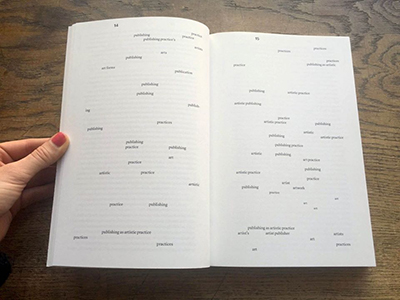

“Poetically—at times beautifully, at other times mischievously—these spreads explore the visual experience of a block of words on a page. They ask the reader to engage with the physical and formal nature of the book that they’re holding; it’s difficult to get too lost in the words, as Studio Pandan’s contributions jolt your concentration, reminding you continuously how and what you’re engaging with. One spread repeats what’s written on the previous page but with all words removed except for “artist,” “practise,” and “publishing.” Another spread redacts all the sentences from the previous page, creating a silent typographic composition.”
More can be read here at the original article:
https://eyeondesign.aiga.org/graphic-design-with-added-value-from-berlins-studio-pandan/
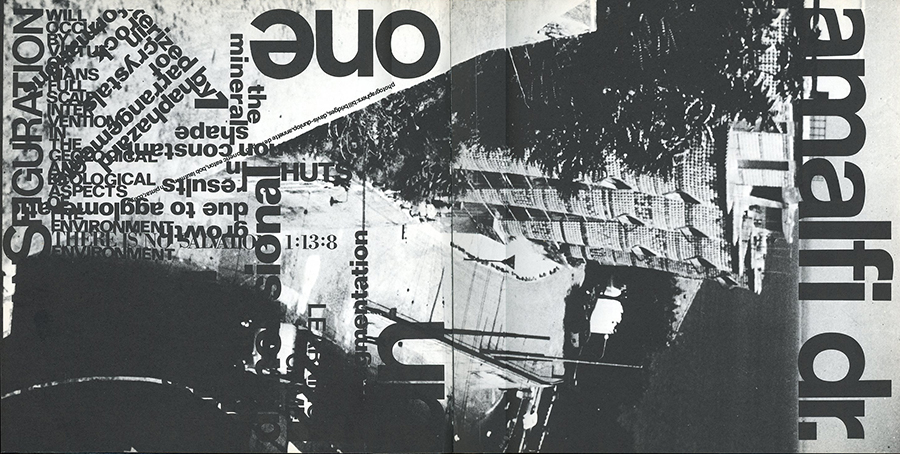
I was also Inspired by Don Wall an architect who has designed a book “Visonary cities”. He explores the integration of text and image is these crazy compositions that are so visually intriguing. The text and image work in a chaotic harmony as lines of dialogue get lost in the darkness of some of the photos.


More can be read here:
https://designobserver.com/feature/don-wall-brave-new-book-design/40091/
I thought back to one video artist I had seen an exhibition of over the holiday. Arthur Jafa creates what he calls “notebooks” where he collates all his imagery.

His Grouped imagery is able to convey a narrative in itself, whether intentional or not and it’s interesting how I engaged with this more abstract narrative containing strong individual images that often shocked and intrigued taken from films news papers, other artists etc.
These artists and designers made me think more about compositions and use of typography. This could help portray my message of flow of consciousness. It’s like the meaning, thought and emotion is affecting the actual book itself by subverting out preconception of how a book is laid out. I want the tactility of turning pages, holding paper in your hands, uncovering something and seeing a physical progression the way you do when you read a book. I love collecting old books from second hand books shops. I wonder if this can be incorporated into my message.

 Cameron Aitken Graphic Design